WE WERE NEVER SUPPOSED TO SEE IT”: The Baltic Sea Discovery That Haunted Dennis Åsberg Until His Final Days 
It did not begin with a confession.
It began with exhaustion.
Dennis Åsberg did not sit down to “reveal secrets.”
He sat down because time was no longer something he could negotiate with.
The co-founder of the Ocean X Team had spent years deflecting questions about the Baltic Sea Anomaly.
Years smiling politely while journalists asked if it was a spaceship.
Years rolling his eyes when YouTube thumbnails turned sonar images into alien doorways.
But as his voice softened and his patience thinned, something changed.
Before he dies, Åsberg reportedly decided to stop protecting people from the truth.
And the truth, according to him, is far more unsettling than aliens.
The Baltic Sea Anomaly was discovered in 2011 during a routine sonar scan of the seafloor between Sweden and Finland.
The image showed a massive circular object.
Roughly 60 meters wide.
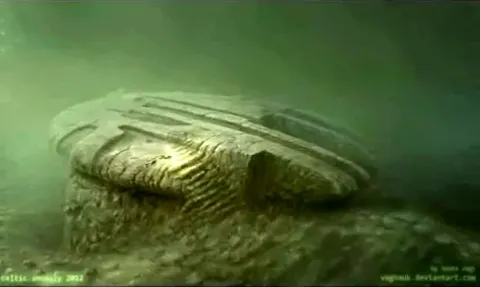
Raised above the seabed.
With what appeared to be straight lines, sharp angles, and a structure that did not resemble any known natural formation.
The internet did what it does best.
It screamed.
UFO.
Ancient weapon.
Nazi superstructure.
Atlantis parking garage.
Åsberg laughed it off at first.
He called it “interesting.”
He said people should calm down.
He said more data was needed.
But behind closed doors, the team’s reaction was different.
According to later interviews, when divers finally descended to the object, instruments began malfunctioning.
Cameras cut out.
Electrical interference spiked.
Compasses behaved erratically.
Not dramatically.

Subtly.
Which is worse.
The divers reported the surface was not metallic.
Not stone.
Not coral.
It was described as “burned.”
As if something had passed over it.
Or through it.
Samples taken from the site showed unusual composition.
Basalt-like rock mixed with materials that did not match surrounding geology.
Glacial explanations were offered publicly.
Privately, Åsberg was not convinced.
Years later, as his health declined, he spoke more freely.
Less carefully.
In a low-key interview that barely made headlines, he admitted something chilling.
The anomaly was not the strange part.
The strange part was what surrounded it.
According to Åsberg, the seafloor around the object looked disturbed in a radial pattern.
As if something had impacted.
Or landed.
Not crashed.
Landed.
He emphasized that word.
He also stated that the object appears older than the surrounding sediment layers.
Which should not be possible.
Not naturally.
That detail alone keeps geologists awake at night.
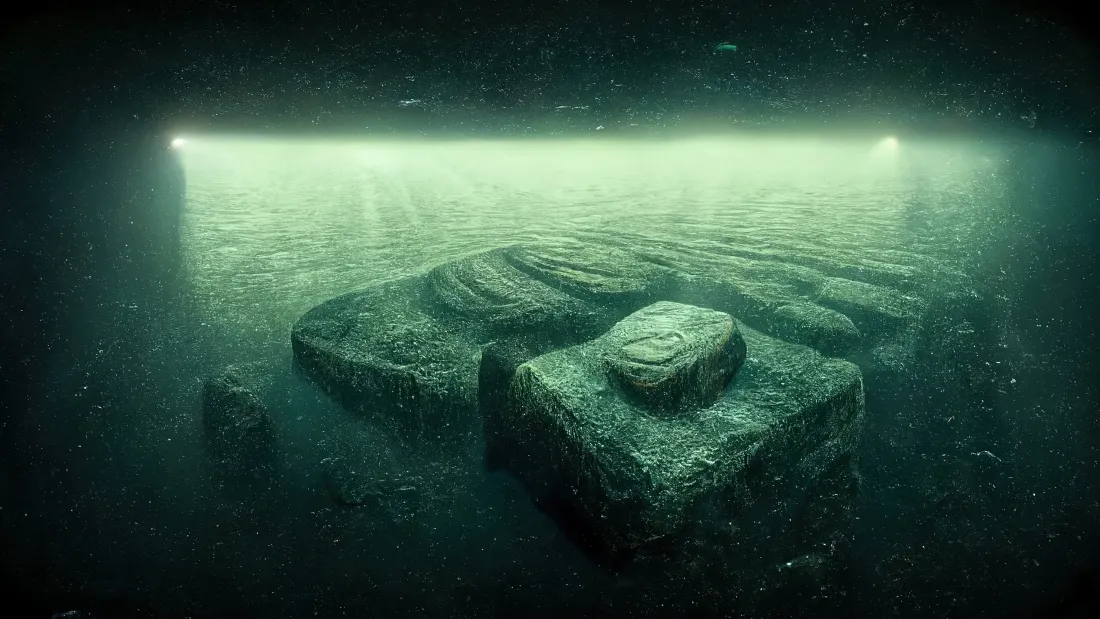
The official narrative insists the anomaly is a glacial deposit.
A rock formation shaped by ice age processes.
Åsberg did not openly reject that explanation.
He simply said, “It does not behave like one.”
When asked what he believes it is, he paused.
Then said something far more terrifying than aliens.
“It may be human.
”
Not modern human.
Not medieval.
Something older.
Something from a time when coastlines were different.
When sea levels were lower.
When entire cultures now lie drowned beneath the waves.
He suggested the Baltic Sea was once dry land.
Which is true.
He suggested structures could have existed there.
Which is possible.
But then he added something else.
“It shows signs of exposure to extreme heat.”
Not fire.
Not lava.
Instantaneous heat.
The kind associated with energy release.
The kind associated with technology.
That statement was quietly ignored.
Because it raises uncomfortable questions.
Questions about lost civilizations.
Questions about advanced knowledge erased by ice and water.
Questions about whether human history is far messier than textbooks allow.
Åsberg also revealed that several data points from the original expedition were never publicly released.
Not because of censorship.
Because of confusion.
The data did not fit any model they had.
Rather than risk ridicule, the team chose silence.
Silence is safer than being wrong.
As his voice weakened, Åsberg reportedly said his biggest regret was not pushing harder for deeper investigation.
Funding dried up.
Interest shifted.
Mockery grew louder than curiosity.
And the anomaly stayed where it was.
Waiting.
Skeptics argue this is all exaggeration.
That sonar images deceive.
That geology creates illusions.
They are not wrong.
But they cannot explain everything.
They cannot explain why instruments failed repeatedly.
They cannot explain the symmetrical features.
They cannot explain the burn-like surface textures.
Most importantly, they cannot explain why the explanation keeps changing.
Glacial rock.
Then basalt formation.
Then moraine deposit.
When something is truly ordinary, the answer stays consistent.
The Baltic Sea Anomaly never has.
Åsberg did not claim aliens.
He did not claim visitors from the stars.
What he implied is far more disturbing.
That humans may have built something.
That humans may have lost it.
That humans may have forgotten entire chapters of their own story.
Aliens are exciting.
Lost human history is threatening.
Because it suggests progress is not linear.
That civilizations rise.
Peak.
Disappear.
And leave behind puzzles we mistake for impossibilities.
Before he dies, Dennis Åsberg did not give the world answers.
He gave it discomfort.
He reminded us that the ocean is not just water.
It is a graveyard.
A library.
A censor.
And the Baltic Sea Anomaly remains where it has always been.
Silent.
Circular.
Patient.
Not screaming for attention.
Just waiting for us to be ready.
Related posts:
 EPSTEIN SURVIVOR BREAKS SILENCE: Confirms Identity of Kathy White’s Daughter – Blue Ivy Bombshell Rocks Beyoncé & Jay-Z
 MEEK MILL BREAKS SILENCE: “Diddy Tried To Seduce Me” — The Shocking Epstein Island Connection Exposed
 Melania Trump: The Lies Linking Me to Epstein Need to End Today Breaks Silence in Explosive White House Statement Denying Any Knowledge of His Crimes